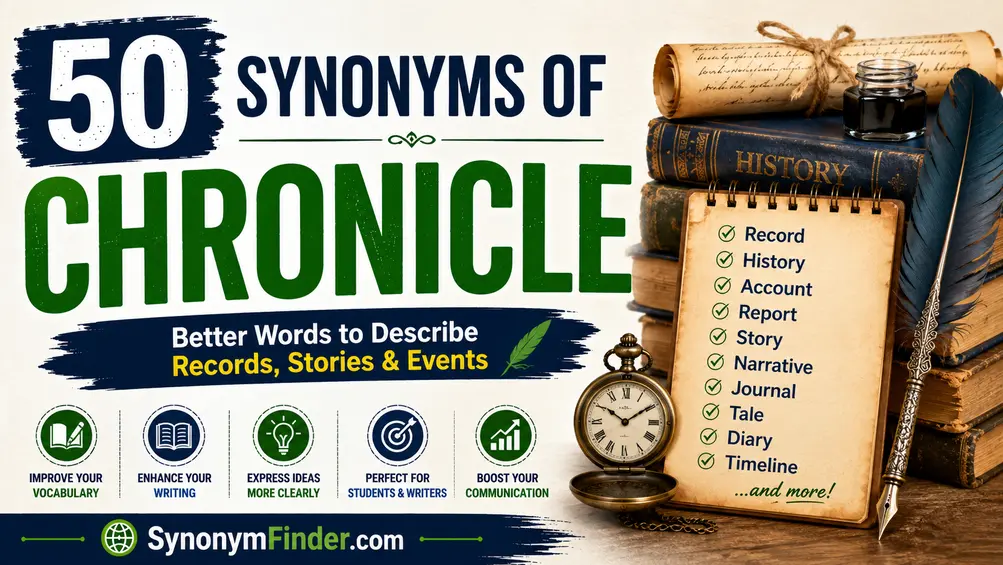
Quick answer: Synonyms of chronicle include record, history, account, report, and story—used to describe written or spoken details of events over time.
Have you ever written the word chronicle many times in an essay or article? Repeating the same word again and again can make writing sound boring and less professional. Students, bloggers, and writers often look for better word choices to improve readability and keep readers interested.
In simple words, chronicle means a record of events arranged in order over time. It is commonly used in history, journalism, storytelling, and daily writing. Many people search for synonyms of chronicle to improve vocabulary and make their content sound more natural.
If you are writing a school assignment, blog post, news article, or story, learning these synonyms can make your writing stronger and clearer. Let’s explore 50 easy and useful synonyms you can start using today.
1. Record
Meaning: Written information about events.
Examples:
- The record was accurate.
- He kept a detailed record.
2. History
Meaning: Past events and stories.
Examples:
- She studies history.
- The book explains history.
3. Account
Meaning: Description of an event.
Examples:
- His account was honest.
- She shared her account.
4. Report
Meaning: Written or spoken information.
Examples:
- The report was clear.
- He finished the report.
5. Story
Meaning: Description of events.
Examples:
- The story was emotional.
- She told a story.
6. Narrative
Meaning: Detailed story or explanation.
Examples:
- The narrative felt real.
- He wrote a narrative.
7. Tale
Meaning: Interesting story.
Examples:
- Grandpa shared a tale.
- The tale sounded magical.
8. Journal
Meaning: Daily written record.
Examples:
- She keeps a journal.
- The journal was private.
9. Diary
Meaning: Personal daily notes.
Examples:
- He wrote in diary.
- Her diary was full.
10. Log
Meaning: Official written record.
Examples:
- The captain checked the log.
- Workers updated the log.
11. Documentation
Meaning: Written proof or records.
Examples:
- Documentation is important.
- They saved all documentation.
12. Memoir
Meaning: Personal life story.
Examples:
- The memoir became popular.
- She published a memoir.
13. Biography
Meaning: Story of someone’s life.
Examples:
- I read his biography.
- The biography was inspiring.
14. Autobiography
Meaning: Life story written by oneself.
Examples:
- He wrote autobiography.
- The autobiography sold well.
15. Annals
Meaning: Historical records over years.
Examples:
- The annals were ancient.
- Historians studied annals.
16. Archive
Meaning: Collection of records.
Examples:
- The archive was huge.
- They searched the archive.
17. File
Meaning: Stored written information.
Examples:
- The file contained details.
- She opened the file.
18. Register
Meaning: Official written list or record.
Examples:
- The register was updated.
- Teachers checked the register.
19. Timeline
Meaning: Events arranged by time.
Examples:
- The timeline was clear.
- Students created timeline.
20. Description
Meaning: Explanation of events or details.
Examples:
- His description helped.
- The description was detailed.
21. Recount
Meaning: Telling events again.
Examples:
- She gave a recount.
- He recounted the event.
22. Retelling
Meaning: Sharing story again.
Examples:
- The retelling sounded exciting.
- Kids enjoyed the retelling.
23. Recital
Meaning: Spoken account of events.
Examples:
- His recital was emotional.
- The recital lasted hours.
24. News
Meaning: Information about recent events.
Examples:
- The news spread quickly.
- We watched the news.
25. Coverage
Meaning: Reporting of events.
Examples:
- Media coverage increased.
- The coverage was fair.
26. Commentary
Meaning: Spoken or written explanation.
Examples:
- The commentary was useful.
- Fans enjoyed commentary.
27. Observation
Meaning: Written note about something seen.
Examples:
- Her observation was correct.
- Scientists made observations.
28. Transcript
Meaning: Written copy of speech.
Examples:
- The transcript was long.
- He read the transcript.
29. Proceedings
Meaning: Official event records.
Examples:
- The proceedings were recorded.
- Lawyers reviewed proceedings.
30. Record Book
Meaning: Book of stored information.
Examples:
- The record book was old.
- She checked record book.
31. Saga
Meaning: Long detailed story.
Examples:
- The saga lasted years.
- Fans loved the saga.
32. Legend
Meaning: Famous old story.
Examples:
- The legend inspired people.
- Children heard the legend.
33. Epic
Meaning: Long heroic story.
Examples:
- The epic was famous.
- Students studied the epic.
34. Profile
Meaning: Detailed description of person or thing.
Examples:
- The profile looked impressive.
- She updated her profile.
35. Case Study
Meaning: Detailed event analysis.
Examples:
- The case study helped students.
- Researchers shared case study.
36. Summary
Meaning: Short explanation of events.
Examples:
- The summary was clear.
- He wrote a summary.
37. Brief
Meaning: Short written report.
Examples:
- The brief explained everything.
- Lawyers prepared a brief.
38. Bulletin
Meaning: Official news report.
Examples:
- The bulletin arrived today.
- They read the bulletin.
39. Dispatch
Meaning: Sent news report.
Examples:
- The dispatch reached headquarters.
- Reporters sent dispatch quickly.
40. Testimony
Meaning: Spoken account or evidence.
Examples:
- His testimony was strong.
- The court heard testimony.
41. Explanation
Meaning: Clear account of something.
Examples:
- Her explanation helped everyone.
- The explanation was simple.
42. Documentation Record
Meaning: Stored written details.
Examples:
- The documentation record was complete.
- Workers checked documentation record.
43. Historical Record
Meaning: Official record of past events.
Examples:
- The historical record survived.
- Historians studied historical record.
44. Daily Log
Meaning: Daily written activity record.
Examples:
- The daily log was updated.
- Workers maintained daily log.
45. Written Account
Meaning: Information written down.
Examples:
- The written account was detailed.
- Students submitted written account.
46. Event Record
Meaning: Stored event information.
Examples:
- The event record helped police.
- Officials reviewed event record.
47. Storyline
Meaning: Main line of events.
Examples:
- The storyline was exciting.
- I liked the storyline.
48. Narrative Record
Meaning: Story-style written account.
Examples:
- The narrative record sounded real.
- Researchers used narrative record.
49. Historical Account
Meaning: Story of past events.
Examples:
- The historical account was accurate.
- Students learned historical account.
50. Event History
Meaning: Record of previous events.
Examples:
- The event history was detailed.
- Officials checked event history.
Why Learning Synonyms of Chronicle Matters
Learning synonyms of chronicle helps you avoid repeating the same word in writing. Different words fit different situations. For example, journal works well for personal writing, while report is better for formal or professional use.
Students can use these words in essays and assignments. Bloggers and content writers can improve readability and SEO by using varied vocabulary. Journalists and storytellers can also make their content more engaging and professional.
Using the right synonym makes communication clearer, stronger, and more interesting for readers.
FAQs
1. What does chronicle mean?
Chronicle means a record or story of events over time.
2. What is another word for chronicle?
Words like record, history, and account are common synonyms.
3. Is chronicle a formal word?
Yes, it is often used in formal and historical writing.
4. Can chronicle mean story?
Yes, it can describe a detailed story of events.
5. Why should I learn synonyms of chronicle?
They improve vocabulary, writing quality, and communication skills.
Conclusion
Learning synonyms of chronicle helps you describe events, stories, and records more clearly. It improves your vocabulary and makes your writing more engaging. If you are writing blogs, essays, reports, or daily content, using different words keeps your communication fresh and professional. Practice these synonyms regularly to improve your English writing and speaking confidence.

Rana Fareed is an MPhil graduate in Business Administration and an LLB degree holder.
He is the author of the blogs on this website, providing accurate and easy-to-use synonyms to help readers improve their English vocabulary. Contact Author Rana Fareed