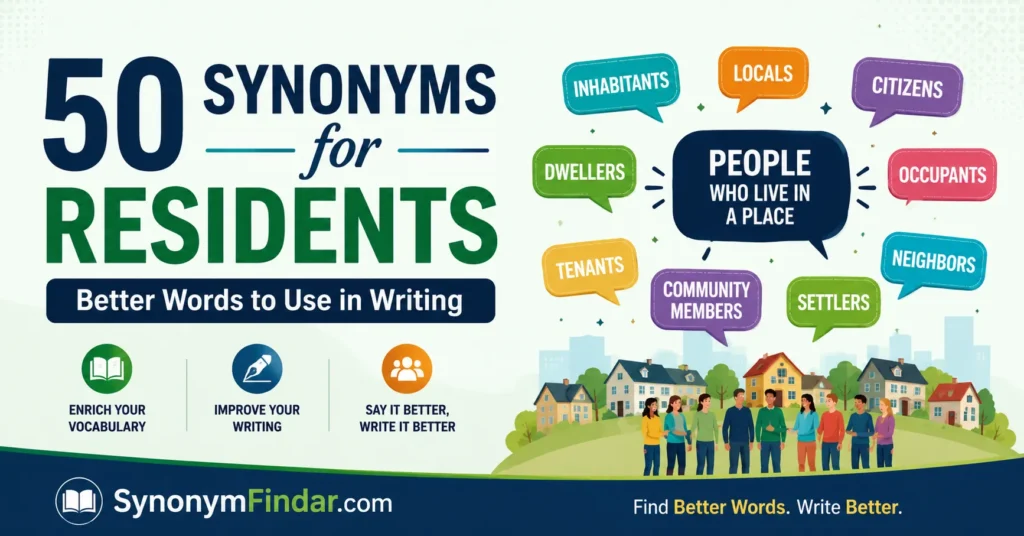
Quick Answer: Common synonyms for residents include inhabitants, occupants, locals, citizens, dwellers, tenants, and settlers.
Have you ever written the word “residents” many times and wanted a better option? Many students, bloggers, and writers face this problem. For example, if you are writing about people who live in a city, using the same word again and again can sound boring.
The phrase synonyms for residents refers to different words that mean people who live in a place. These words can help make your writing more interesting and clear. Learning synonyms for residents is useful for students, bloggers, content writers, and anyone who uses English every day. By knowing more synonyms for residents, you can improve your vocabulary and communicate ideas in a better way.
1. Inhabitants
Meaning: People who live in a place.
Examples:
- The inhabitants love the quiet town.
- Many inhabitants joined the festival.
2. Occupants
Meaning: People who stay or live in a building or space.
Examples:
- The occupants left the house early.
- New occupants moved in last week.
3. Locals
Meaning: People who live in a particular area.
Examples:
- Locals know the best food spots.
- The locals welcomed visitors warmly.
4. Citizens
Meaning: People who belong to a city or country.
Examples:
- Citizens voted in the election.
- The mayor thanked all citizens.
5. Dwellers
Meaning: People who live in a specific place.
Examples:
- City dwellers enjoy many services.
- Forest dwellers depend on nature.
6. Tenants
Meaning: People who rent and live in a property.
Examples:
- The tenants paid rent on time.
- New tenants arrived yesterday.
7. Settlers
Meaning: People who move to a new place to live.
Examples:
- Early settlers built small homes.
- The settlers worked hard together.
8. Neighbors
Meaning: People who live near each other.
Examples:
- Our neighbors are very friendly.
- The neighbors shared food today.
9. Householders
Meaning: People who own or manage a home.
Examples:
- Householders attended the meeting.
- Many householders planted trees.
10. Homeowners
Meaning: People who own the homes they live in.
Examples:
- Homeowners repaired the road.
- Local homeowners formed a group.
11. Lodgers
Meaning: People who rent a room in a home.
Examples:
- The lodgers ate dinner together.
- Several lodgers stayed upstairs.
12. Boarders
Meaning: People who live and eat in the same place for payment.
Examples:
- The boarders enjoyed breakfast.
- New boarders arrived this month.
13. Villagers
Meaning: People who live in a village.
Examples:
- Villagers gathered near the square.
- The villagers celebrated together.
14. Townspeople
Meaning: People who live in a town.
Examples:
- Townspeople supported the event.
- The townspeople welcomed guests.
15. Cityfolk
Meaning: People who live in a city.
Examples:
- Cityfolk enjoy public transport.
- Many cityfolk visited the park.
16. Community Members
Meaning: People who belong to a local community.
Examples:
- Community members cleaned the streets.
- The event united community members.
17. Natives
Meaning: People born in a particular place.
Examples:
- The natives shared local stories.
- Many natives speak the language.
18. Indigenous People
Meaning: Original people of a region.
Examples:
- Indigenous people protect traditions.
- The museum honored indigenous people.
19. Population
Meaning: All people living in an area.
Examples:
- The population keeps growing.
- The population welcomed the change.
20. Public
Meaning: The people of a community.
Examples:
- The public enjoyed the concert.
- The public supported the project.
21. Denizens
Meaning: People, animals, or things that live in a place.
Examples:
- The denizens loved the market.
- Park denizens gathered daily.
22. Occupiers
Meaning: People living in or using a place.
Examples:
- The occupiers maintained the building.
- Occupiers received new keys.
23. Renters
Meaning: People who pay to live in a property.
Examples:
- Renters attended the meeting.
- Many renters moved recently.
24. Leaseholders
Meaning: People who hold a property lease.
Examples:
- Leaseholders reviewed the rules.
- The leaseholders met today.
25. Colonists
Meaning: People who settle in a new region.
Examples:
- Colonists built farms nearby.
- The colonists created roads.
26. Homesteaders
Meaning: People who establish and live on land.
Examples:
- Homesteaders grew their own food.
- The homesteaders built cabins.
27. Occupying Residents
Meaning: People currently living in a place.
Examples:
- Occupying residents signed the form.
- The occupying residents stayed calm.
28. Parishioners
Meaning: People living in a church area.
Examples:
- Parishioners attended the service.
- The parishioners helped families.
29. Constituents
Meaning: People living in an area represented by a leader.
Examples:
- Constituents met the mayor.
- The constituents asked questions.
30. Electors
Meaning: People who can vote in an area.
Examples:
- Electors visited polling stations.
- The electors made their choice.
31. Urbanites
Meaning: People who live in cities.
Examples:
- Urbanites enjoy modern services.
- Many urbanites bike to work.
32. Suburbanites
Meaning: People who live in suburbs.
Examples:
- Suburbanites prefer quiet streets.
- Many suburbanites commute daily.
33. Countryfolk
Meaning: People who live in rural areas.
Examples:
- Countryfolk value simple living.
- The countryfolk gathered outdoors.
34. Villagers-at-Large
Meaning: People living throughout a village area.
Examples:
- Villagers-at-large attended the fair.
- The villagers-at-large shared ideas.
35. Housemates
Meaning: People living in the same house.
Examples:
- Housemates cooked dinner together.
- My housemates are very helpful.
36. Roommates
Meaning: People sharing a room or home.
Examples:
- Roommates watched a movie.
- The roommates split expenses.
37. Cohabitants
Meaning: People living together in one place.
Examples:
- Cohabitants shared responsibilities.
- The cohabitants planned a trip.
38. Residents-at-Large
Meaning: People living across a wider area.
Examples:
- Residents-at-large joined the survey.
- The residents-at-large voiced concerns.
39. Islanders
Meaning: People who live on an island.
Examples:
- Islanders depend on boats.
- The islanders welcomed tourists.
40. Migrants
Meaning: People who move to another place to live.
Examples:
- Migrants searched for new opportunities.
- Many migrants settled there.
41. Newcomers
Meaning: People who recently arrived to live somewhere.
Examples:
- Newcomers attended the welcome event.
- The newcomers explored the town.
42. Permanent Residents
Meaning: People who live in a place for a long time.
Examples:
- Permanent residents know the area well.
- The permanent residents voted today.
43. Long-Term Residents
Meaning: People who have lived somewhere for many years.
Examples:
- Long-term residents shared memories.
- The long-term residents welcomed change.
44. Occupying Tenants
Meaning: Tenants currently living in a property.
Examples:
- Occupying tenants received notices.
- The occupying tenants paid fees.
45. Borough Residents
Meaning: People living in a borough.
Examples:
- Borough residents attended the meeting.
- Borough residents requested improvements.
46. District Residents
Meaning: People living in a district.
Examples:
- District residents enjoyed the festival.
- The district residents raised concerns.
47. Area Residents
Meaning: People living in a specific area.
Examples:
- Area residents planted flowers.
- Area residents joined the cleanup.
48. Local People
Meaning: People who live in a nearby place.
Examples:
- Local people recommended restaurants.
- The local people offered help.
49. Civic Members
Meaning: People who belong to a local society or area.
Examples:
- Civic members supported the project.
- The civic members met weekly.
50. Community Residents
Meaning: People living within the same community.
Examples:
- Community residents organized an event.
- Community residents shared resources.
Related Synonyms and Semantic Keywords
Search engines often look for related words and phrases to understand a topic better. Here are some closely related terms to synonyms for residents:
- Resident synonyms
- Another word for residents
- Alternative words for residents
- People who live in a place
- Local inhabitants
- Community members
- City residents
- Town residents
- Neighborhood residents
- Local citizens
- Population
- Occupants
- Dwellers
- Householders
- Tenants
- Homeowners
- Settlers
- Locals
- Permanent residents
- Inhabitants
FAQs
What is another word for residents?
Some common alternatives include inhabitants, locals, citizens, occupants, dwellers, tenants, and community members.
What does residents mean?
Residents are people who live in a specific place, such as a city, town, village, neighborhood, or country.
Are residents and citizens the same?
No. Residents live in a place, while citizens usually have legal membership and rights within a country.
What is the most formal synonym for residents?
Formal alternatives include inhabitants, occupants, householders, domiciled persons, and permanent residents.
Which synonym for residents is best for writing?
The best synonym depends on context. Inhabitants, locals, citizens, and community members are among the most widely used options.
Why should I learn synonyms for residents?
Learning synonyms improves writing quality, reduces repetition, strengthens vocabulary, and helps create more engaging content.
Conclusion
Learning synonyms for residents can make your writing stronger and more interesting. These alternative words help you avoid repeating the same term again and again. Whether you are writing blogs, essays, emails, or speaking in daily conversations, using the right synonym can improve your communication. Practice these words often and try adding them to your vocabulary. The more synonyms you learn, the more confident and effective your English will become.

Rana Fareed is an MPhil graduate in Business Administration and an LLB degree holder.
He is the author of the blogs on this website, providing accurate and easy-to-use synonyms to help readers improve their English vocabulary. Contact Author Rana Fareed