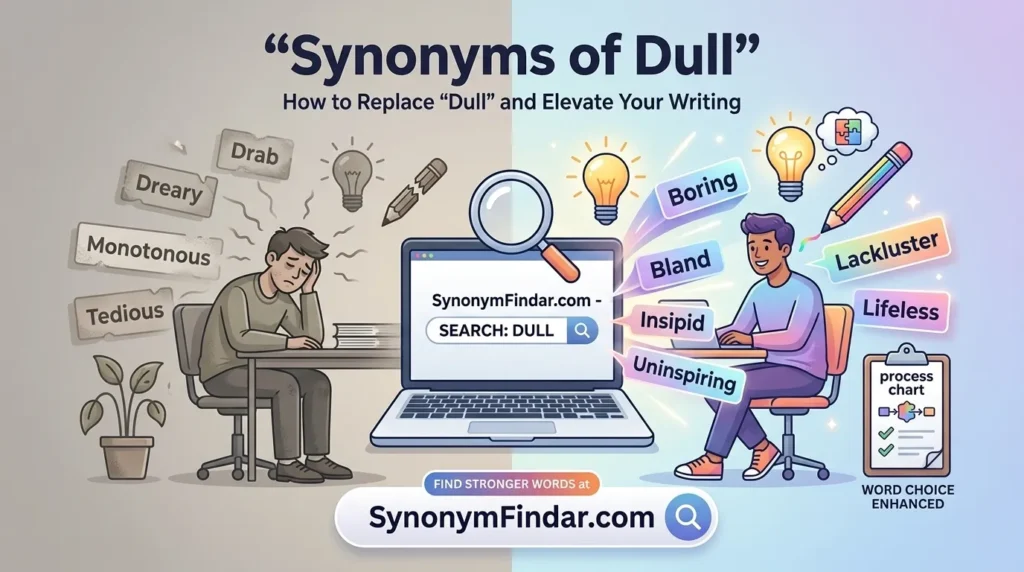
Quick Answer: Synonyms of dull include boring, tedious, monotonous, uninteresting, dreary, bland, and lifeless—words used to describe something lacking excitement, brightness, sharpness, or interest.
Have you ever read a book, watched a movie, or attended a lecture that felt painfully slow and uninteresting? Chances are you described it as dull. While dull is a useful word, repeating it too often can make your writing repetitive.
In simple terms, dull means lacking interest, excitement, brightness, sharpness, or energy. Depending on the context, it can describe a person, object, color, event, conversation, or experience.
Learning synonyms of dull can improve your vocabulary, strengthen your writing, and help you express yourself more accurately. If you’re writing essays, blogs, stories, or professional content, these alternatives will help you communicate more effectively.
Let’s explore 50 useful synonyms of Dull with meanings and examples.
1. Boring
Meaning: Not interesting or exciting.
Examples:
- The lecture was boring.
- We watched a boring movie.
2. Tedious
Meaning: Long, repetitive, and tiring.
Examples:
- Filling out forms was tedious.
- The task became tedious after a while.
3. Monotonous
Meaning: Lacking variety and excitement.
Examples:
- The job was monotonous.
- His speech sounded monotonous.
4. Uninteresting
Meaning: Not attracting attention.
Examples:
- The article was uninteresting.
- I found the discussion uninteresting.
5. Dreary
Meaning: Sad, dull, and depressing.
Examples:
- It was a dreary afternoon.
- The room looked dreary.
6. Bland
Meaning: Lacking excitement or strong qualities.
Examples:
- The presentation felt bland.
- His writing was bland.
7. Lifeless
Meaning: Without energy or excitement.
Examples:
- The performance seemed lifeless.
- The party felt lifeless.
8. Flat
Meaning: Lacking energy or emotion.
Examples:
- The joke fell flat.
- Her voice sounded flat.
9. Dry
Meaning: Not entertaining or engaging.
Examples:
- The report was dry.
- The lecture felt dry.
10. Tiresome
Meaning: Annoyingly dull or repetitive.
Examples:
- The meeting was tiresome.
- His complaints became tiresome.
11. Wearisome
Meaning: Causing fatigue through boredom.
Examples:
- The journey was wearisome.
- It became a wearisome routine.
12. Repetitive
Meaning: Repeated too often.
Examples:
- The music was repetitive.
- His arguments were repetitive.
13. Mundane
Meaning: Ordinary and lacking excitement.
Examples:
- She was tired of mundane tasks.
- The story focused on mundane details.
14. Routine
Meaning: Predictable and ordinary.
Examples:
- His work became routine.
- Daily chores felt routine.
15. Colorless
Meaning: Lacking interest or personality.
Examples:
- The character seemed colorless.
- The speech was colorless.
16. Spiritless
Meaning: Without enthusiasm or energy.
Examples:
- The team looked spiritless.
- His response was spiritless.
17. Passive
Meaning: Showing little energy or interest.
Examples:
- The audience remained passive.
- He took a passive approach.
18. Listless
Meaning: Lacking energy or enthusiasm.
Examples:
- She felt listless all day.
- The crowd appeared listless.
19. Lethargic
Meaning: Sluggish and lacking energy.
Examples:
- The heat made everyone lethargic.
- He felt lethargic after lunch.
20. Sleepy
Meaning: Causing drowsiness or lacking activity.
Examples:
- It was a sleepy town.
- The classroom felt sleepy.
21. Drab
Meaning: Lacking brightness or excitement.
Examples:
- The building looked drab.
- She wore drab clothing.
22. Gray
Meaning: Dull and lacking vibrancy.
Examples:
- The weather was gray and dull.
- The landscape looked gray.
23. Gloomy
Meaning: Dark, depressing, and uninspiring.
Examples:
- The day felt gloomy.
- The office had a gloomy atmosphere.
24. Joyless
Meaning: Without happiness or excitement.
Examples:
- It was a joyless event.
- His expression looked joyless.
25. Stale
Meaning: No longer fresh or interesting.
Examples:
- The jokes became stale.
- The content felt stale.
26. Hackneyed
Meaning: Overused and lacking originality.
Examples:
- The plot was hackneyed.
- His ideas sounded hackneyed.
27. Predictable
Meaning: Easy to foresee and lacking surprise.
Examples:
- The ending was predictable.
- The story felt predictable.
28. Mechanical
Meaning: Done without feeling or creativity.
Examples:
- His performance was mechanical.
- She gave a mechanical response.
29. Expressionless
Meaning: Showing no emotion.
Examples:
- He remained expressionless.
- Her face looked expressionless.
30. Wooden
Meaning: Stiff and lacking emotion.
Examples:
- The actor gave a wooden performance.
- His speech sounded wooden.
31. Banal
Meaning: So common that it becomes boring.
Examples:
- The conversation was banal.
- His comments sounded banal.
32. Commonplace
Meaning: Ordinary and unremarkable.
Examples:
- The idea was commonplace.
- The design looked commonplace.
33. Prosaic
Meaning: Lacking imagination or excitement.
Examples:
- The novel became prosaic.
- His writing felt prosaic.
34. Vapid
Meaning: Offering nothing stimulating or meaningful.
Examples:
- The interview was vapid.
- Her remarks sounded vapid.
35. Insipid
Meaning: Lacking interest, flavor, or excitement.
Examples:
- The story was insipid.
- The discussion felt insipid.
36. Featureless
Meaning: Without distinctive qualities.
Examples:
- The landscape appeared featureless.
- The room looked featureless.
37. Uninspiring
Meaning: Failing to motivate or excite.
Examples:
- The speech was uninspiring.
- The campaign felt uninspiring.
38. Unexciting
Meaning: Not thrilling or interesting.
Examples:
- The game was unexciting.
- The event felt unexciting.
39. Uneventful
Meaning: Lacking notable happenings.
Examples:
- The trip was uneventful.
- It was an uneventful week.
40. Slow
Meaning: Moving or progressing without excitement.
Examples:
- The movie started slow.
- Business was slow this month.
41. Dragging
Meaning: Moving too slowly and becoming boring.
Examples:
- The meeting was dragging on.
- The film felt dragging.
42. Drowsy
Meaning: Causing sleepiness.
Examples:
- The warm room felt drowsy.
- The lecture made students drowsy.
43. Dim
Meaning: Not bright or vivid.
Examples:
- The light was dim.
- The colors appeared dim.
44. Muted
Meaning: Soft, subdued, or lacking intensity.
Examples:
- The painting used muted colors.
- His reaction was muted.
45. Lackluster
Meaning: Lacking energy, brilliance, or excitement.
Examples:
- The performance was lackluster.
- Sales showed lackluster growth.
46. Faded
Meaning: Losing brightness or importance.
Examples:
- The curtains had faded.
- The excitement faded quickly.
47. Dull-witted
Meaning: Slow to understand.
Examples:
- He was unfairly called dull-witted.
- The character seemed dull-witted.
48. Obtuse
Meaning: Slow to understand or perceive.
Examples:
- He was being obtuse on purpose.
- Her comment sounded obtuse.
49. Slow-minded
Meaning: Not quick in understanding.
Examples:
- The character appeared slow-minded.
- He was unfairly labeled slow-minded.
50. Unremarkable
Meaning: Not interesting or noteworthy.
Examples:
- The restaurant was unremarkable.
- It was an unremarkable performance.
Why Learning Synonyms of Dull Matters
Learning synonyms of dull helps you avoid repetition and improve your communication. Different synonyms fit different situations. For example, boring works for everyday conversations, while tedious fits repetitive tasks, and lackluster is ideal for professional writing.
Students can use these words in essays and assignments. Bloggers can improve readability and SEO. Professionals can communicate more clearly in reports, presentations, and emails.
The right synonym makes your writing more precise and engaging.
Common Uses of Dull Synonyms
| Context | Example Synonyms |
|---|---|
| Movies & Books | Boring, Predictable, Uninspiring |
| Work & Tasks | Tedious, Repetitive, Mundane |
| Colors & Appearance | Drab, Dim, Muted |
| People & Emotions | Listless, Spiritless, Lethargic |
| Writing & Speeches | Prosaic, Vapid, Insipid |
Comparison Table: Simple vs Advanced Synonyms
| Simple Synonym | Advanced Synonym |
|---|---|
| Boring | Tedious |
| Plain | Drab |
| Ordinary | Commonplace |
| Uninteresting | Insipid |
| Weak | Lackluster |
FAQs
1. What does dull mean?
Dull means lacking excitement, brightness, sharpness, or interest.
2. What is the most common synonym for dull?
Boring is the most common synonym.
3. Is tedious the same as dull?
They are similar, but tedious emphasizes repetition and fatigue.
4. Can dull describe a person?
Yes, it can describe someone who lacks energy or excitement.
5. What is a formal synonym for dull?
Lackluster, prosaic, and insipid are formal alternatives.
6. What is the opposite of dull?
Exciting, vibrant, lively, or interesting.
7. Why should I learn synonyms of dull?
They improve vocabulary, writing quality, and communication skills.
Conclusion
The word dull is useful, but relying on it too often can weaken your writing. By learning these 50 synonyms of dull, you can describe boring situations, lifeless performances, ordinary experiences, and uninspiring ideas with greater accuracy.
If you’re writing essays, blogs, business reports, or creative content, these alternatives will help you express yourself more clearly and professionally. Start using these synonyms regularly, and you’ll quickly build a stronger and more versatile vocabulary.

Rana Fareed is an MPhil graduate in Business Administration and an LLB degree holder.
He is the author of the blogs on this website, providing accurate and easy-to-use synonyms to help readers improve their English vocabulary. Contact Author Rana Fareed