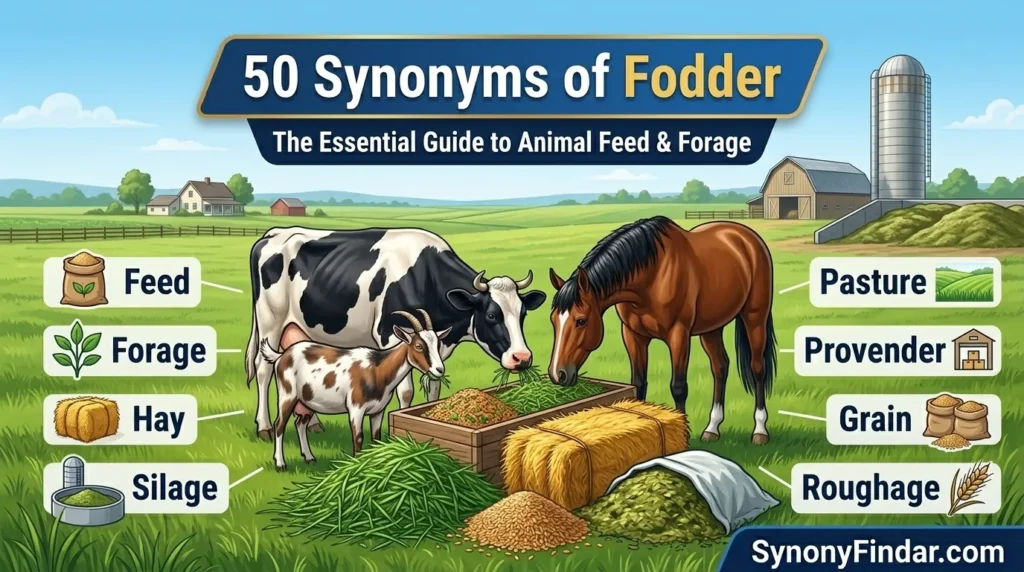
Synonyms of fodder include feed, forage, hay, silage, pasture, and provender words used to describe food for livestock and animals.
The word fodder is commonly used in agriculture, farming, and animal care. It refers to food that is given to livestock such as cows, horses, sheep, and goats. Farmers often use fodder to keep animals healthy and productive throughout the year.
However, fodder is not the only word that can describe animal feed. Depending on the situation, you might use terms like forage, hay, feed, or silage. Learning these alternatives can improve your vocabulary and help you communicate more clearly about farming, agriculture, and livestock management.
The word fodder is also sometimes used figuratively. For example, people may say that a topic is “fodder for discussion” or “fodder for the media,” meaning it provides material for conversation or reporting.
If you’re a student, farmer, writer, or English learner, knowing different synonyms of fodder can make your writing richer and more precise.
Let’s explore 50 useful synonyms of fodder with meanings and examples.
1. Feed
Meaning: General food for animals.
Examples:
- The farmer bought animal feed.
- Fresh feed was delivered daily.
2. Forage
Meaning: Plant material eaten by grazing animals.
Examples:
- Cattle searched for forage.
- Good forage improves livestock health.
3. Hay
Meaning: Dried grass used as animal food.
Examples:
- The horses ate hay.
- Farmers stored hay for winter.
4. Silage
Meaning: Fermented feed stored for livestock.
Examples:
- The cows consumed silage.
- Silage helps during dry seasons.
5. Pasture
Meaning: Land with grass for grazing.
Examples:
- Sheep grazed in the pasture.
- The pasture remained green.
6. Provender
Meaning: Food for livestock.
Examples:
- The barn held plenty of provender.
- Farmers gathered provender for winter.
7. Grain
Meaning: Seeds used as animal feed.
Examples:
- Chickens were fed grain.
- The farmer purchased extra grain.
8. Rations
Meaning: Measured amounts of feed.
Examples:
- Livestock received daily rations.
- The rations were carefully prepared.
9. Roughage
Meaning: Fibrous feed for animals.
Examples:
- Roughage aids digestion.
- Cows need sufficient roughage.
10. Green Feed
Meaning: Fresh plant feed.
Examples:
- Green feed was harvested today.
- Animals preferred fresh green feed.
11. Grazing Material
Meaning: Plants eaten while grazing.
Examples:
- The field provided grazing material.
- Livestock consumed the grazing material.
12. Herbage
Meaning: Grass and vegetation for animals.
Examples:
- The herbage grew quickly.
- Cattle fed on rich herbage.
13. Crop Residue
Meaning: Leftover plant material used as feed.
Examples:
- Farmers used crop residue.
- Animals ate the crop residue.
14. Alfalfa
Meaning: A nutritious livestock feed crop.
Examples:
- Horses enjoyed alfalfa.
- The farm produced alfalfa.
15. Clover
Meaning: A plant often used for animal feed.
Examples:
- Sheep grazed on clover.
- Clover improved soil quality.
16. Straw
Meaning: Dried stalks sometimes used as feed.
Examples:
- The cattle consumed straw.
- Straw was stored in bundles.
17. Grass
Meaning: Common grazing food.
Examples:
- Horses ate fresh grass.
- The grass grew rapidly.
18. Vegetation
Meaning: Plant life used for feeding.
Examples:
- Livestock fed on vegetation.
- The area contained dense vegetation.
19. Browse
Meaning: Leaves and shoots eaten by animals.
Examples:
- Goats fed on browse.
- Browse was plentiful in the area.
20. Nutriment
Meaning: Food that provides nourishment.
Examples:
- Nutriment is vital for livestock.
- The feed offered proper nutriment.
21. Nourishment
Meaning: Food needed for growth and health.
Examples:
- Animals require nourishment.
- Proper nourishment improves productivity.
22. Sustenance
Meaning: Food that supports life.
Examples:
- The herd depended on sustenance.
- The pasture provided sustenance.
23. Feedstuff
Meaning: Material used as animal feed.
Examples:
- Corn is a common feedstuff.
- Farmers purchased feedstuffs regularly.
24. Concentrate Feed
Meaning: High-energy animal feed.
Examples:
- Dairy cows received concentrate feed.
- The feed improved milk production.
25. Animal Feed
Meaning: General food for livestock.
Examples:
- The store sold animal feed.
- Animal feed costs increased.
26. Livestock Feed
Meaning: Feed specifically for farm animals.
Examples:
- Livestock feed was delivered.
- The farmer stocked livestock feed.
27. Feed Grain
Meaning: Grain intended for animals.
Examples:
- Feed grain prices rose.
- The cattle consumed feed grain.
28. Feed Crop
Meaning: Crops grown for animal consumption.
Examples:
- Corn is a popular feed crop.
- The farm planted feed crops.
29. Corn Feed
Meaning: Corn used as livestock food.
Examples:
- The animals enjoyed corn feed.
- Corn feed boosted energy.
30. Pellets
Meaning: Compressed animal feed.
Examples:
- The rabbits ate pellets.
- Feed pellets are easy to store.
31. Mash
Meaning: Soft mixed feed.
Examples:
- Chickens received mash.
- The mash contained vitamins.
32. Chaff
Meaning: Plant fragments used as feed.
Examples:
- Horses ate chaff.
- Chaff was mixed with grain.
33. Fodder Crop
Meaning: Crops grown specifically for fodder.
Examples:
- Sorghum is a fodder crop.
- The farmer harvested fodder crops.
34. Grazing Feed
Meaning: Natural feed available in fields.
Examples:
- Grazing feed was abundant.
- Livestock relied on grazing feed.
35. Feed Mix
Meaning: Combination of feed ingredients.
Examples:
- The feed mix contained nutrients.
- Farmers prepared a balanced feed mix.
36. Plant Feed
Meaning: Plant-based animal food.
Examples:
- Plant feed supported healthy growth.
- The animals consumed plant feed.
37. Diet
Meaning: Regular food intake.
Examples:
- The cow’s diet was monitored.
- A healthy diet improved production.
38. Food Supply
Meaning: Available food source.
Examples:
- The food supply was sufficient.
- Drought affected the food supply.
39. Feedstock
Meaning: Material used as feed.
Examples:
- The farm stored feedstock.
- Feedstock costs increased.
40. Agricultural Feed
Meaning: Feed used in farming.
Examples:
- Agricultural feed was delivered.
- The company sold agricultural feed.
41. Silage Mix
Meaning: Mixed fermented feed.
Examples:
- The silage mix was nutritious.
- Cows consumed the silage mix daily.
42. Pasturage
Meaning: Grazing land and feed.
Examples:
- The farm had rich pasturage.
- Animals benefited from the pasturage.
43. Feed Material
Meaning: Substance used for feeding animals.
Examples:
- Feed material was stored safely.
- The feed material contained nutrients.
44. Grazing Crop
Meaning: Crops grown for grazing.
Examples:
- Ryegrass is a grazing crop.
- Farmers planted grazing crops.
45. Livestock Rations
Meaning: Planned animal feed portions.
Examples:
- Livestock rations were balanced.
- The veterinarian reviewed rations.
46. Animal Nutrition
Meaning: Food supporting animal health.
Examples:
- Animal nutrition is important.
- Good animal nutrition improves growth.
47. Feed Resource
Meaning: Available source of feed.
Examples:
- Grass is a valuable feed resource.
- The farm expanded feed resources.
48. Grazing Vegetation
Meaning: Plants suitable for grazing.
Examples:
- Grazing vegetation covered the hills.
- Livestock relied on grazing vegetation.
49. Forage Crop
Meaning: Crops grown for grazing or feed.
Examples:
- Oats are a forage crop.
- The farmer harvested forage crops.
50. Animal Sustenance
Meaning: Food necessary for animal survival.
Examples:
- The pasture provided animal sustenance.
- Farmers ensured adequate animal sustenance.
Why Learning Synonyms of Fodder Matters
Learning synonyms of fodder helps improve vocabulary and makes writing about agriculture, livestock, and farming more precise. Different terms may be used depending on the type of feed, animal, or farming practice being discussed.
Using the right synonym can make articles, reports, and educational content more informative and professional. It also helps avoid repeating the same word throughout your writing.
Common Uses of Fodder in Everyday English
| Situation | Example |
|---|---|
| Farming | “The cattle needed more fodder.” |
| Dairy Production | “Fresh fodder improved milk output.” |
| Livestock Care | “The farmer stored fodder.” |
| Agriculture | “Fodder crops were planted.” |
| Discussion (Figurative) | “The issue became media fodder.” |
Best Synonyms by Situation
| Situation | Best Synonym |
|---|---|
| General Animal Food | Feed |
| Grazing Animals | Forage |
| Winter Storage | Hay |
| Dairy Farming | Silage |
| Formal Agriculture | Provender |
FAQs
1. What does fodder mean?
Fodder refers to food given to livestock and farm animals.
2. What is another word for fodder?
Feed, forage, hay, and silage are common synonyms.
3. Is hay the same as fodder?
Hay is a type of fodder, but fodder includes many kinds of animal feed.
4. What is forage?
Forage is plant material eaten by grazing animals.
5. Can fodder be used figuratively?
Yes, it can mean material for discussion, news, or debate.
6. Which synonym is best for farming?
Feed and forage are among the most common farming terms.
7. Why learn synonyms of fodder?
They improve vocabulary and make agricultural writing more accurate.
Conclusion
Learning synonyms of fodder can help you better understand farming, livestock care, and agricultural terminology. If you are writing educational content, studying agriculture, or simply expanding your vocabulary, these alternatives provide useful ways to describe animal feed and nourishment.
By practicing these synonyms regularly, you can make your writing more varied, professional, and informative while gaining a stronger understanding of agricultural language.

Rana Fareed is an MPhil graduate in Business Administration and an LLB degree holder.
He is the author of the blogs on this website, providing accurate and easy-to-use synonyms to help readers improve their English vocabulary. Contact Author Rana Fareed